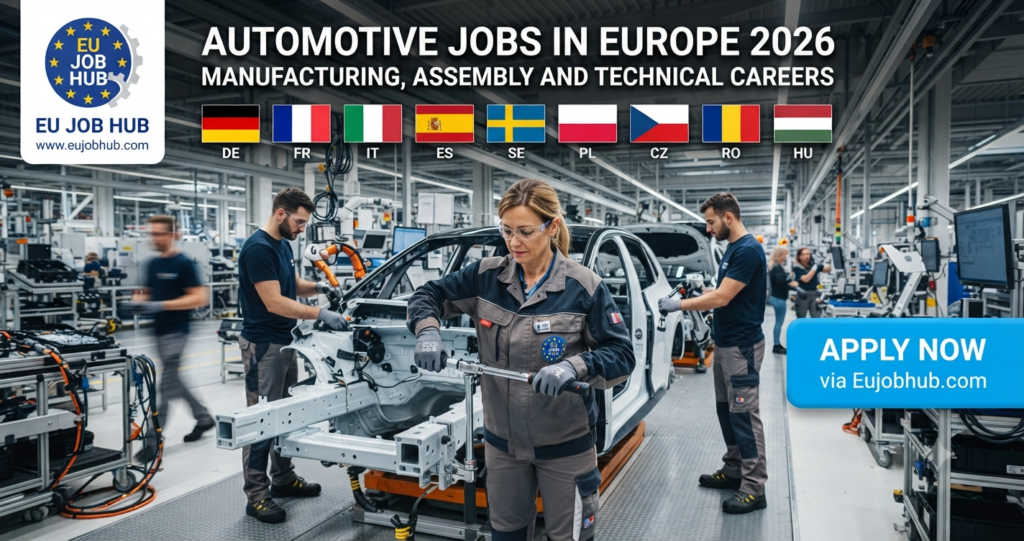
Automotive Jobs in Europe 2026: Manufacturing, Assembly and Technical Careers
September 15, 2026
Automotive
Automotive Jobs in Europe 2026: Roles, Skills and Permits
How automotive jobs in Europe are structured, which skills employers look for and how to check recognition and permits before applying.
EU Job Hub Editorial Team · Updated 1 October 2026
Introduction
Automotive jobs in Europe range from assembly line work to technical and engineering roles. Factories, suppliers and service centres all hire. The skills needed vary a lot. This guide helps you work out where you fit and how to apply with a clear profile.
It does not quote wages or company hiring plans. Those change often and differ by country. Use the checklist below to compare offers.
Main Types of Roles
The sector has several layers of work:
- Production and assembly operators.
- Quality inspectors and testers.
- Maintenance technicians and mechatronics staff.
- Service and repair mechanics.
- Engineers, designers and software specialists.
Each layer asks for different proof. Operators often need short training. Technicians usually need vocational qualifications. Engineers usually need a degree.
Regulated Work and Recognition
Some automotive work touches regulated areas such as electrical safety. Directive 2005/36/EC also covers recognition based on experience for certain craft and industry occupations. The proof you need depends on the job and the country. Ask the authority or the employer which documents count.
Finding Automotive Jobs in Europe
Use EURES to search vacancies across Europe. Filter by country and occupation. Many manufacturers and suppliers list openings on their own career pages. Regional industrial areas often host clusters of suppliers, so search by region too.
Cedefop publishes skills intelligence on Europe. Its Skills OVATE tool analyses online job adverts. You can use it to see which skills employers mention for technical roles. This helps you decide what to learn next.
Skills That Employers Ask For
Adverts differ, but some themes repeat. Employers value reading technical drawings and following work instructions. They value precision and quality checks. They value teamwork on shift lines. Digital skills matter more as vehicles use more software and electronics.
If you have these skills, say so clearly. Give examples from past jobs.
Preparing Your Application
Write a short CV that lists your tasks, tools and training. Name the machines and systems you used. Add certificates and licences. If you can, add a short line on safety and quality practice. A Europass CV is easy for recruiters to read.
Permits for Non-EU Workers
Citizens outside the EU usually need a permit. Rules are national. Some countries publish shortage lists. Some use salary rules. For highly qualified engineers, the EU Blue Card may apply. A written job offer is nearly always the starting point. Confirm the route with the employer and the authority.
Shift Work and Conditions
Factories often run several shifts. Ask about the pattern, breaks and overtime. Ask about safety training and protective equipment. A well-run site answers these questions without delay.
Language
Production sites often use the local language for instructions. Learn the basics of safety and tools terms. Engineering teams may work in English. Ask which language your team uses.
Scams to Avoid
- Offers that ask for a fee to secure a job.
- Employers with no verifiable company name.
- Contracts that are only verbal.
- Recruiters who ask for your passport.
A Short Plan
- Decide which layer of work fits your training.
- Check recognition and permit rules for your target country.
- Search EURES and company career pages.
- Prepare a clear CV with tools, tasks and certificates.
- Get the contract in writing before you move.
Training and Moving Up
Many people enter the sector in production and then move up. Employers often run internal training on quality, machine setup and maintenance. Ask during the interview what training is offered and how people progress. A site that invests in training is usually a better place to build a long career.
Short courses can also help. Topics such as quality control, technical drawing and basic electronics are common. Choose courses that match the adverts you see most often in your target country.
Questions to Ask Before You Accept
- Is the contract directly with the plant or through an agency?
- What are the shift patterns and how is overtime handled?
- What safety training do I get in my first week?
- Who pays for relocation, if anyone?
- Is there a probation period, and how long is it?
Write down the answers and ask for them in the contract.
Planning Your Move
Automotive plants are often in industrial regions outside big cities. Check how you will get to work, since shift times may not match public transport. Ask whether the employer offers a shuttle or help with housing. Research local rent levels and registration rules. Many countries ask new residents to register their address within a set time, so check the rule on arrival.
Keep your contract, permit and insurance papers together. They will be needed for many first-month tasks.
Sources to Check
Use official platforms and national authorities to verify current rules before applying or travelling.
Continue Your Europe Job Search
Find vacancies, compare countries and prepare a stronger European job application at EU Job Hub, browse current jobs, or build a Europass CV.
Disclaimer: EU Job Hub provides general editorial information for jobseekers. It does not guarantee employment, sponsorship, work-permit approval or visa approval. Employment and immigration rules vary by country and by personal circumstances. Verify important information with employers and official authorities before making decisions. Never pay an individual or recruiter solely because they promise a job, placement or visa.