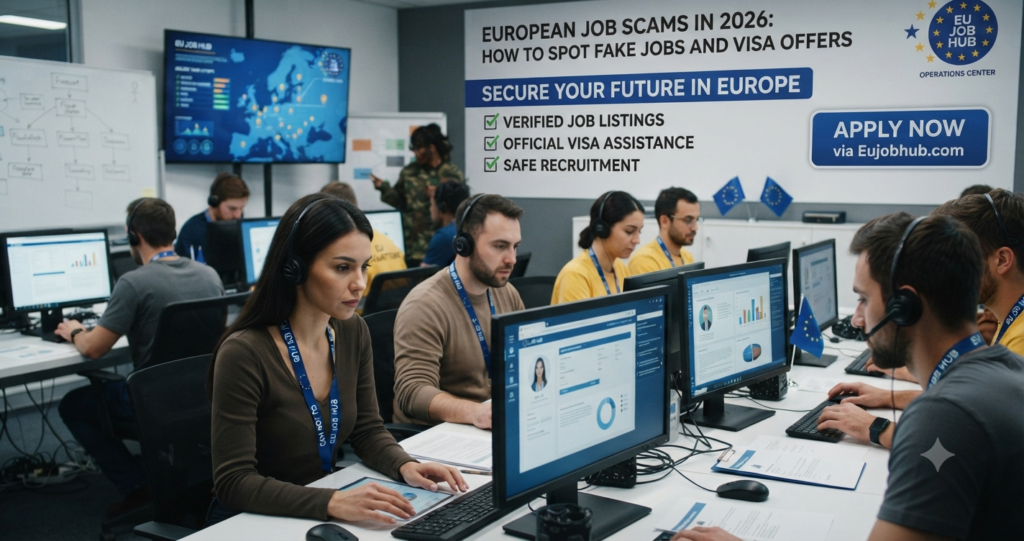
Why job scams work
International jobseekers can be especially vulnerable because distance makes it harder to verify an employer, and the promise of a work visa can make an offer feel urgent. Scammers often combine a real company name, a copied logo and a convincing-looking contract with a request for money or sensitive documents.
The safest mindset is to separate three questions: Does the employer exist? Does this vacancy exist? Is this person genuinely authorised to recruit for it? All three need evidence.
Common warning signs
Watch for guaranteed employment, guaranteed visa approval, pressure to pay immediately, requests to use cryptocurrency or unusual payment channels, free email addresses presented as official corporate contacts, inconsistent company names, unexplained “registration” fees and contracts containing obvious errors.
One warning sign does not automatically prove fraud, but several together should stop the application until you can independently verify the offer.
Visa promises deserve extra scrutiny
An employer may support a work-authorisation process, but a recruiter cannot guarantee that a government will approve a visa or residence permit. Immigration decisions depend on the rules of the destination country and the applicant’s circumstances.
Use official government immigration pages to confirm requirements. EU-level information can help you understand the framework, but national authorities decide individual applications.
The verification test
- Find the company independently: Do not use only the contact details supplied in the message.
- Find the careers page: Look for the same role or a matching vacancy.
- Check the recruiter: Confirm the person through a company channel where possible.
- Compare details: Location, title, salary, duties and contact information should align.
- Ask direct questions: Request the legal employer name and application process.
- Pause before paying: Verify every requested fee and recipient.
Protect your documents
A passport copy is sensitive. So are bank details, tax identifiers and signed blank forms. Do not send a full document package to an unknown contact merely because they claim it is needed to “open your file”.
If a legitimate employer needs documentation, the request should have a clear purpose and a professional route. Redact unnecessary information when possible and keep records of what you shared.
If you already paid money
Contact your bank or payment provider promptly and preserve receipts, messages, contracts and account details. If identity documents were shared, consider the appropriate identity-protection steps available in your country. Report suspected fraud through the relevant authorities or platform.
Do not pay a second fee because the scammer claims it will recover the first payment.
A safe application rule
If an offer sounds unusually easy, make verification harder rather than easier. Search the company yourself, visit its official website, check whether the vacancy appears through a credible channel and compare the contact details. Legitimate recruitment should survive reasonable verification.
Read before applying
Use the Jobs Without an Agent Guide to understand direct applications and the Visa Sponsorship Guide to understand why sponsorship wording needs careful checking.
Continue your Europe job search
Search current vacancies, compare countries and prepare a clearer application before you apply.