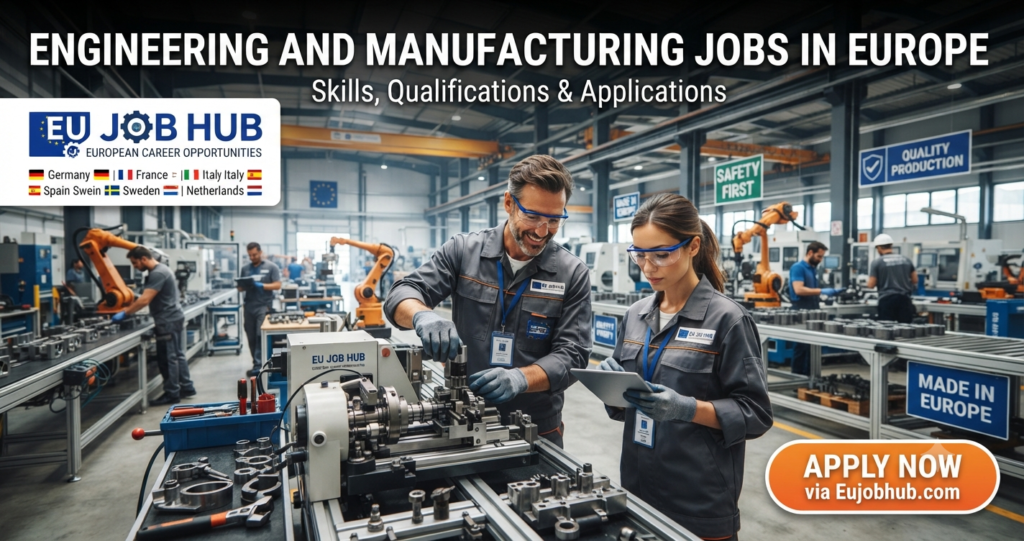
What employers mean by engineering and manufacturing
European manufacturing covers automotive, machinery, electronics, chemicals, food production, industrial equipment and many other sectors. Roles can include mechanical engineer, production engineer, maintenance technician, quality engineer, process technician, CNC operator, automation technician and production supervisor.
The strongest applications translate technical experience into outcomes that a foreign hiring manager can understand.
Show the machinery and systems
Instead of writing only “worked in production”, identify the machinery, processes and systems you genuinely used. Examples might include PLC/SCADA exposure, CNC, assembly lines, maintenance systems, quality checks, production planning, CAD, welding, hydraulic/pneumatic equipment or ERP tools. Avoid creating an impressive technical list that you cannot discuss in an interview.
Turn factory experience into evidence
Explain what you were responsible for, what standards you followed and what problems you solved. If you improved downtime, scrap, throughput, changeover time or safety, use genuine figures. If no figure exists, describe the process clearly rather than inventing a percentage.
Application framework
- Role: Use the closest accurate job title.
- Process: Describe the production or engineering environment.
- Technology: Name relevant machinery/software.
- Responsibility: Explain your actual level of ownership.
- Result: Add verified outcomes where available.
- Qualification: Put relevant education and certifications in a visible position.
Qualifications and recognition
Engineering titles and technical qualifications can be regulated or assessed differently across countries and professions. Do not assume that an engineering degree automatically provides every professional right in another country. When a vacancy requires recognition, registration or a specific local qualification, verify the requirement through the relevant authority or employer.
Manufacturing languages
Technical English can be valuable in multinational plants, but local-language ability may matter for safety instructions, maintenance teams, production documentation and communication with operators. If you are targeting a specific country, check the actual vacancy requirements rather than relying on broad claims that “English is enough”.
Where to search
Look at employer career pages, industrial groups, specialist recruitment firms, EURES and established job platforms. Search by process and technology as well as job title. “Maintenance technician PLC”, “production engineer automotive”, “CNC operator” and “quality technician” can produce more focused results than “engineering jobs Europe”.
Build a long-term profile
The highest-value technical profile is not necessarily the person with the longest list of tools. It is the candidate who can demonstrate safe working, problem solving, process understanding, measurable results and the ability to learn unfamiliar systems. Combine technical depth with communication and digital skills.
Next steps
Use the Most In-Demand Jobs guide, compare compensation using the Salary Guide, and prepare your application with the European CV Guide.
Continue your Europe job search
Search current vacancies, compare countries and prepare a clearer application before you apply.