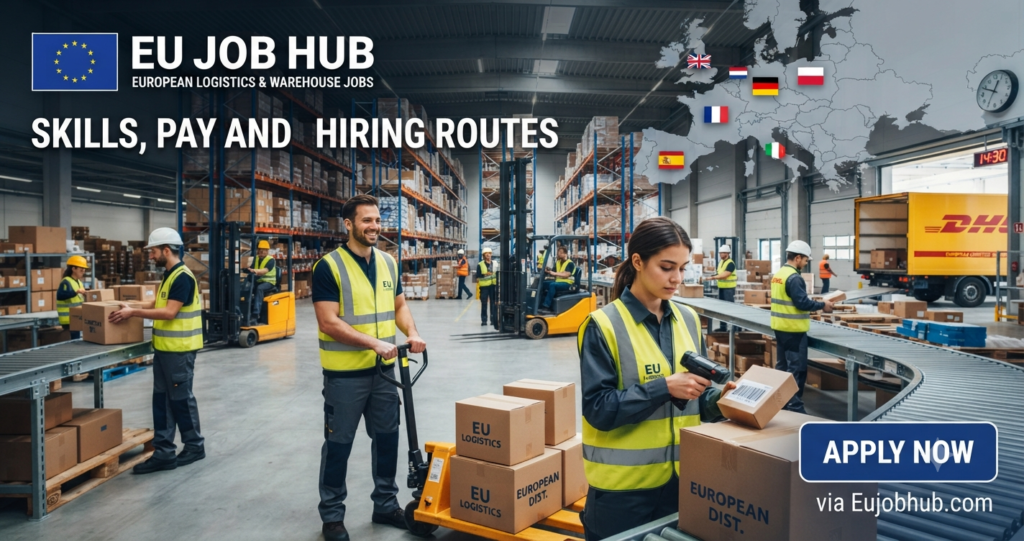
What counts as a logistics or warehouse job
The sector includes warehouse operative, picker/packer, forklift operator, inventory clerk, storekeeper, dispatch coordinator, logistics administrator, transport planner and supply-chain roles. The required skill level varies widely. Some jobs are entry-level; others depend on ERP knowledge, driving licences, equipment certification or previous industry experience.
Do not apply based on the word “warehouse” alone. Read the actual duties and shift pattern.
Skills employers can understand
Useful evidence includes inventory control, barcode scanning, goods receiving, picking and packing, stock reconciliation, cycle counting, ERP/WMS systems, Excel, loading procedures, safety practices, dispatch documentation and team coordination. For supervisory roles, add manpower planning, KPI tracking and process improvement.
Certificates and equipment
Forklift and other equipment certifications can matter, but requirements are country- and employer-specific. Never list a certificate you do not hold. If a vacancy requires a local certification, check whether your existing qualification is recognised or whether additional training is required.
A strong application structure
- Put your warehouse/logistics title near the top.
- List the systems and equipment you actually use.
- Show the type and scale of inventory you handled when genuine.
- Explain shift, safety and team responsibilities.
- Highlight language and computer skills.
- Check whether the employer hires candidates needing work authorisation.
Pay needs context
Warehouse and logistics pay varies by country, region, shift, collective agreements, experience and overtime. Avoid comparing a single advertised hourly rate with another country’s monthly salary without checking hours, taxes and allowances. The Europe Salary Guide gives a framework for making more useful comparisons.
Where international candidates should be careful
Some employers hire internationally for hard-to-fill roles, while others require existing work rights. A vacancy may be genuine but still unsuitable for a non-EU applicant. Look for clear wording on work authorisation and relocation instead of assuming that labour demand equals sponsorship.
Career progression
Warehouse work can lead to inventory control, team leadership, logistics coordination, transport planning, procurement or supply-chain roles. If your goal is long-term mobility, build transferable skills such as Excel, WMS/ERP, reporting, process improvement and basic data analysis alongside operational experience.
Related EU Job Hub resources
See the Most In-Demand Jobs in Europe, Visa Sponsorship Guide and free Europass CV page before applying.
Continue your Europe job search
Search current vacancies, compare countries and prepare a clearer application before you apply.