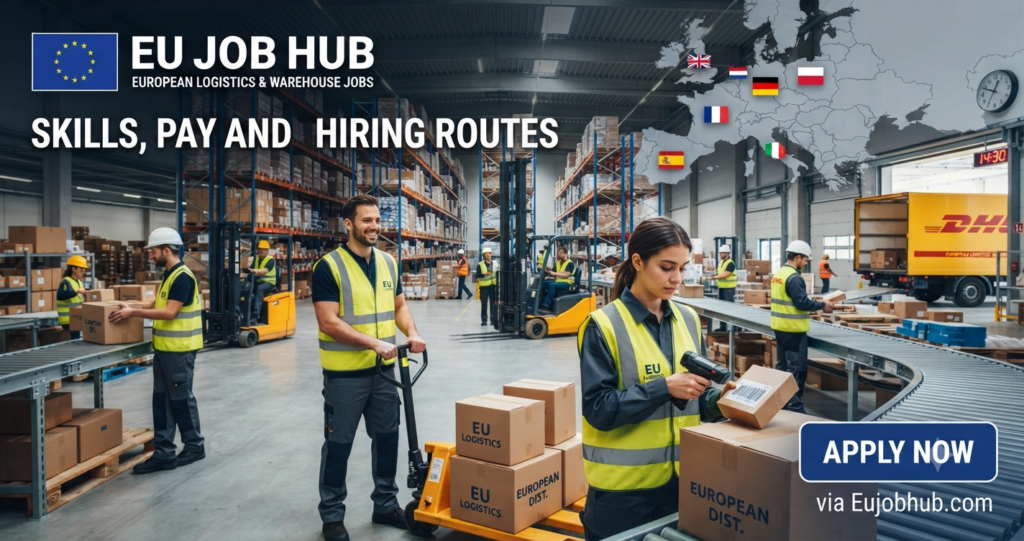
Logistics and Warehouse Jobs in Europe 2026: Skills, Pay and Hiring Routes
September 14, 2026
Logistics
Warehouse Jobs in Europe 2026: How to Search Safely
How to find warehouse jobs in Europe, read adverts, understand agency work and check the contract details before you travel.
EU Job Hub Editorial Team · Updated 1 October 2026
Introduction
Warehouse jobs in Europe exist in many countries and cities. Logistics hubs, ports and distribution centres hire for picking, packing, loading and driving roles. Some roles need little formal training. Others need licences or certificates. This guide shows how to search well and avoid common mistakes.
It does not quote wages, because pay depends on the country, the employer and the contract. Compare offers using the checklist below instead.
Typical Roles
Logistics covers several kinds of work. Common roles include:
- Order picker and packer.
- Forklift or reach truck operator.
- Loading and unloading worker.
- Inventory and stock controller.
- Shift supervisor or team leader.
Some roles need a forklift licence. A licence earned in one country may not be accepted in another. Ask the employer what it will recognise.
Finding Warehouse Jobs in Europe
EURES is a public network that lists vacancies across Europe. Search by occupation and country. Employer websites are another source. Large logistics firms post their openings on their own career pages.
Cedefop, the EU agency for vocational training, runs a tool called Skills OVATE. It analyses online job adverts across Europe. It can show which skills employers ask for in logistics roles. Use it to see what is in demand in your chosen country.
Reading an Advert Carefully
A clear advert names the employer and the work place. It states the contract type and the working hours. It lists the tasks and the skills required. Missing details are a warning sign. Ask for them before you agree to anything.
Agencies and Direct Employers
Many warehouse jobs are filled through staffing agencies. The agency is your employer, and you work at the client site. This is legal in many countries, but the rules differ. Ask who signs your contract, who pays you and who is responsible for your safety.
Check that the agency is registered. Do not pay a fee to get a job.
Shifts and Physical Demands
Warehouse work is physical. Many sites run night and weekend shifts. Ask about shift patterns and break rules. Ask whether the employer supplies safety shoes and gloves. Clear answers show a well-run site.
Permits for Non-EU Workers
Citizens outside the EU generally need a permit to work. The rules are national. Some countries list shortage occupations. Others use salary rules or quotas. A written job offer is almost always required. Always check the current rules with the national authority.
Housing and Living Costs
Some employers offer housing. Check the cost and the terms. A deduction from your pay must be clearly stated in the contract. Ask whether you can leave the housing if you change jobs.
Language
Many sites use the local language for safety instructions. Learn basic words for safety, tools and directions. Some international logistics firms work in English. Ask which language your team uses.
Red Flags
- A request for money to secure a job.
- A contract that is only verbal.
- No company name or address.
- Pay promises that sound unusually high.
- Pressure to hand over your passport.
A Simple Plan
- Choose a country and check the permit rules.
- Search EURES and employer career pages.
- Use Skills OVATE to see which skills are in demand.
- Ask about licences, shifts, housing and the employing company.
- Get the contract in writing before you travel.
Documents to Prepare
Keep your papers in one folder. Carry copies, and keep the originals somewhere safe. Employers usually ask for similar things.
- A valid passport, or an ID card if you are an EU citizen.
- Any forklift licence or safety certificate you hold.
- A short CV with your past warehouse or factory jobs.
- Proof of address, if the employer asks for it.
- A bank account in the country, which many employers need for pay.
Checking Your First Payslip
When you receive your first payslip, compare it with your contract. Check the hours, the rate and each deduction. If something looks wrong, ask the employer or the agency to explain in writing. Early questions are easier to settle than problems that build up over months.
Keep your payslips for the whole time you work. They can be useful for future permits, tax and rental applications.
Planning Your Move
Plan your first month before you leave. Book your first nights of housing, even if the stay is temporary. Learn how to get from your home to the site, and how long the trip takes at night. Keep enough money for the first weeks, because the first pay often comes after a month. Ask the employer exactly when and how you will be paid.
Save the phone numbers of your supervisor and the employer. Keep your contract and your permit in a safe place.
Sources to Check
Use official platforms and national authorities to verify current rules before applying or travelling.
Continue Your Europe Job Search
Find vacancies, compare countries and prepare a stronger European job application at EU Job Hub, browse current jobs, or build a Europass CV.
Disclaimer: EU Job Hub provides general editorial information for jobseekers. It does not guarantee employment, sponsorship, work-permit approval or visa approval. Employment and immigration rules vary by country and by personal circumstances. Verify important information with employers and official authorities before making decisions. Never pay an individual or recruiter solely because they promise a job, placement or visa.